NAIDOC Week is always a time to come together. It is a time to celebrate culture, to honour the strength of our communities, and to recognise the stories that continue to shape who we are.
Each year, it invites all Australians to learn, listen and connect with the world’s oldest continuing cultures.
This year is significant. Fifty years of NAIDOC is more than a milestone. It tells the story of generations of Aboriginal and Torres Strait Islander people who showed up, who organised, who created space and who carried culture forward even when the system worked against them. It reflects the tireless work of Elders, leaders and communities who made sure that culture remained strong, visible and proudly held.
The 2026 theme, “50 Years of Deadly”, gives us a moment to reflect on that journey. It recognises that where we are today is not by chance. It comes from decades of advocacy, resilience and collective strength. It honours the people who stood firm in their identity and culture, and who created pathways for the generations coming through now.
It is powerful and important to look back at the stories that got us to where we are today, but NAIDOC has never been only about reflection. It is also about continuing. It is about recognising that culture is still being practised, strengthened and shared every day, in homes, on Country, through language, through art, through community and through connection.
The amazing artwork for this year, Paralpi by Yankunytjatjara artist Zaachariaha Fielding, captures this feeling clearly. It speaks to movement across generations, through memory, song and story. The movement in the artwork reminds us that culture is not something fixed in the past. It is living. It connects Ancestors to young people. It carries knowledge forward while making space for new expression.
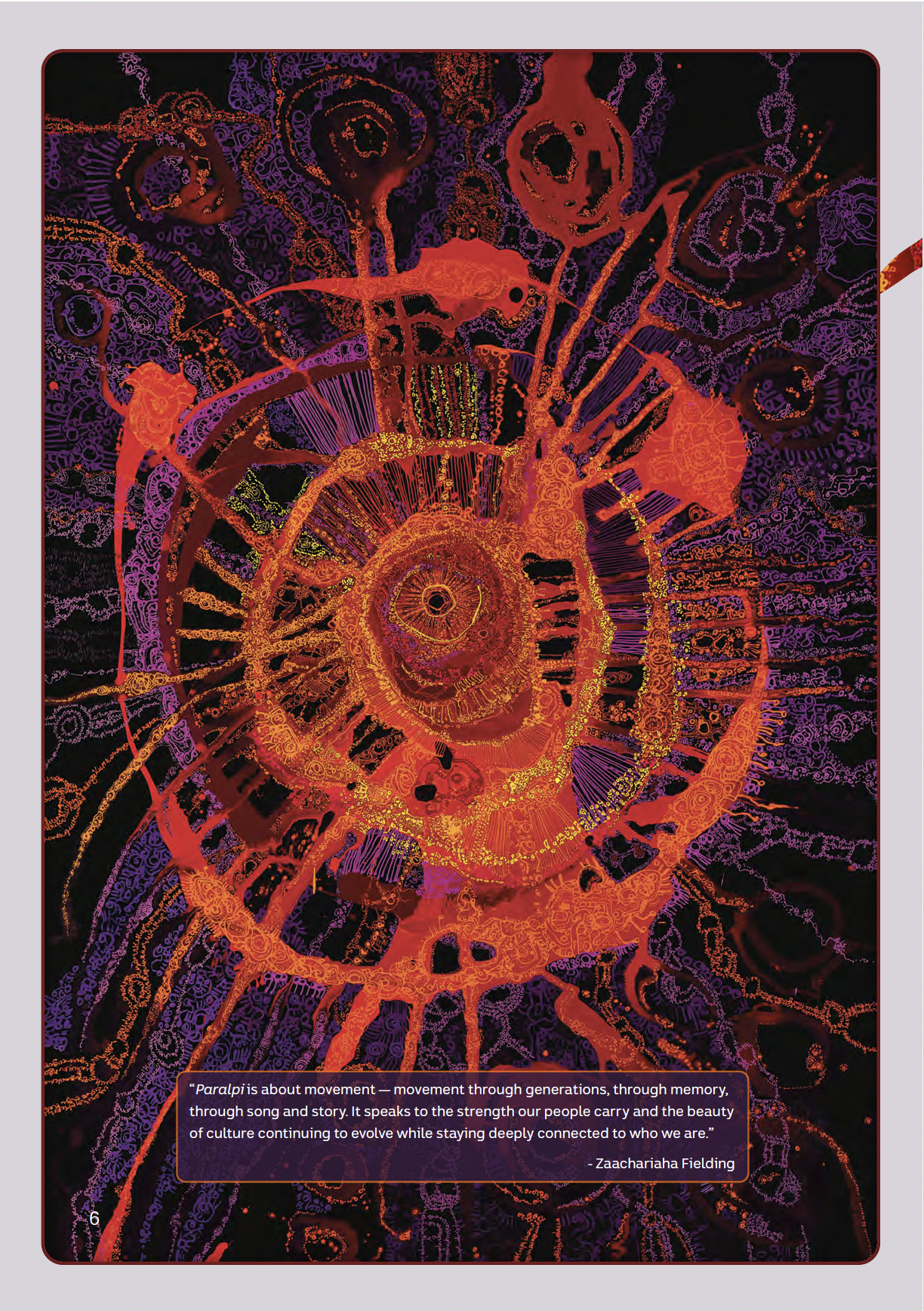
There is also a sense of continuity and renewal in the work. The flowing forms reflect connection between people, place and future generations. Across communities, we are seeing language coming back, storytelling shifting into new spaces, and young people stepping forward grounded in culture and identity. This is something to celebrate. It is also something to support and protect.
To understand NAIDOC fully, we also have to understand its history. What we now celebrate as NAIDOC Week came from protest. The Day of Mourning in 1938 brought people together to call for rights, recognition and justice at a time when those things were being denied. That legacy matters. It reminds us that NAIDOC has always been shaped by Aboriginal and Torres Strait Islander people standing up, speaking out and demanding change on their own terms.
That balance still matters today. Celebration sits alongside the ongoing work of creating real, lasting change. The last fifty years have shown what is possible when communities lead.
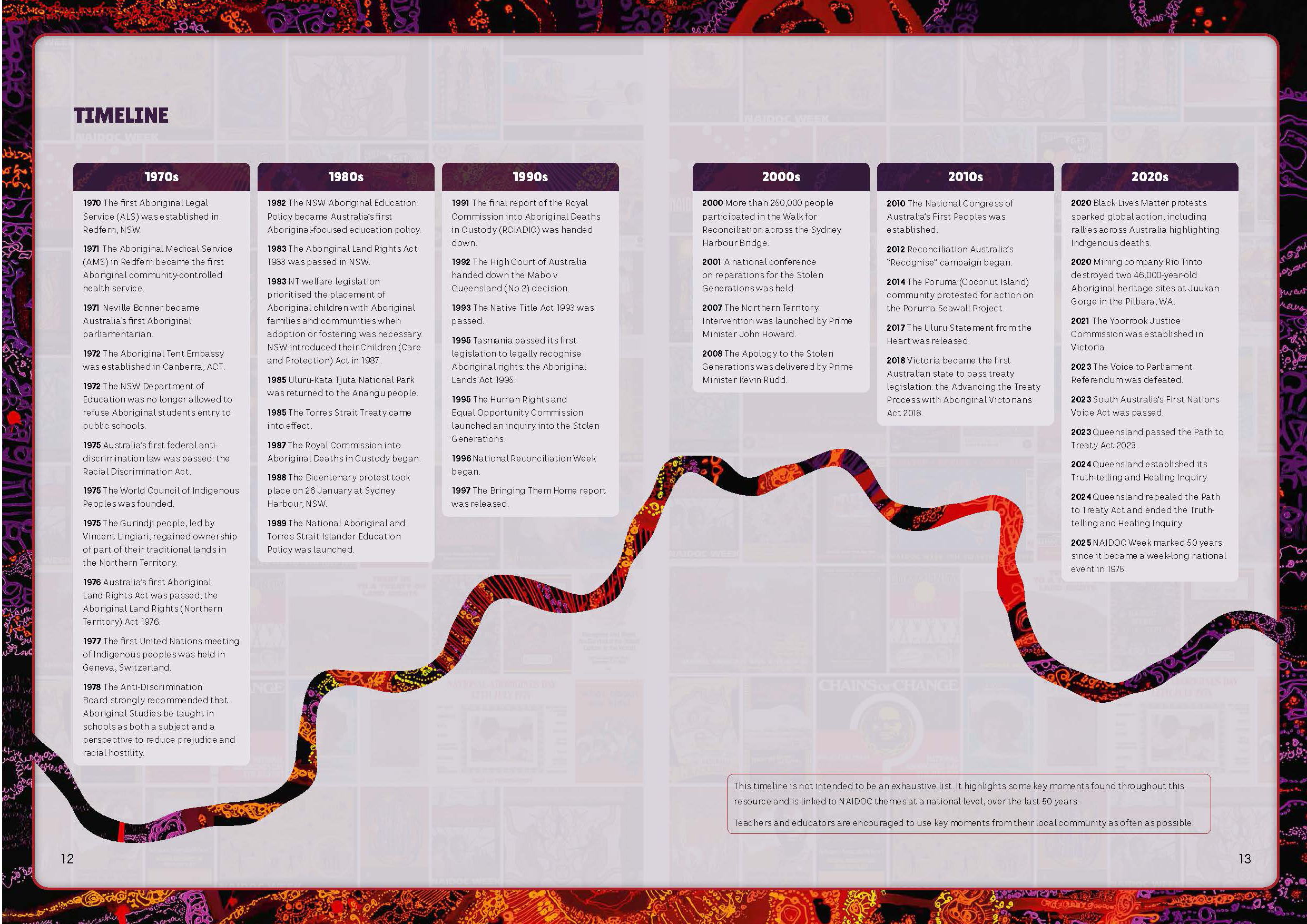
Progress has come through the strength and persistence of Aboriginal and Torres Strait Islander people who have pushed for land rights, built community-controlled services, shaped national conversations and continued to assert their right to self-determination. These are not outcomes that came from outside. They are the result of leadership from within community.
At Murawin, this is what we see every day. Lasting change happens when Aboriginal and Torres Strait Islander people are at the centre of decisions that affect their lives. Self-determination is not just a principle. It is a practice. It is about communities having the authority, the space and the support to define what works, grounded in their knowledge, their priorities and their ways of doing things. When systems listen properly and back that leadership, outcomes are stronger, more sustainable and more meaningful.
This is especially important when we talk about closing the gap. The gap cannot be closed through top-down approaches or short-term solutions. It requires investment in community-led models, long-term trust and a shift in how systems work alongside Aboriginal and Torres Strait Islander people. Community knows what works. The role of institutions is to support, not direct, and to create the conditions where that leadership can thrive.
NAIDOC Week is an important moment to reflect on this, but it cannot be the only moment. Backing First Nations people means ongoing commitment. It means making space for Indigenous leadership in real and practical ways. It means recognising that change is most effective when it comes from within community and is supported by systems that are responsive and accountable.
The past few years have shown how challenging and complex this work can be. There have been strong examples of community leadership, particularly through Aboriginal Community Controlled Organisations, alongside ongoing barriers and setbacks. This is the reality of long-term change. It takes time, consistency and trust. What remains constant is the resilience of communities, and the determination to keep moving forward, on their own terms.