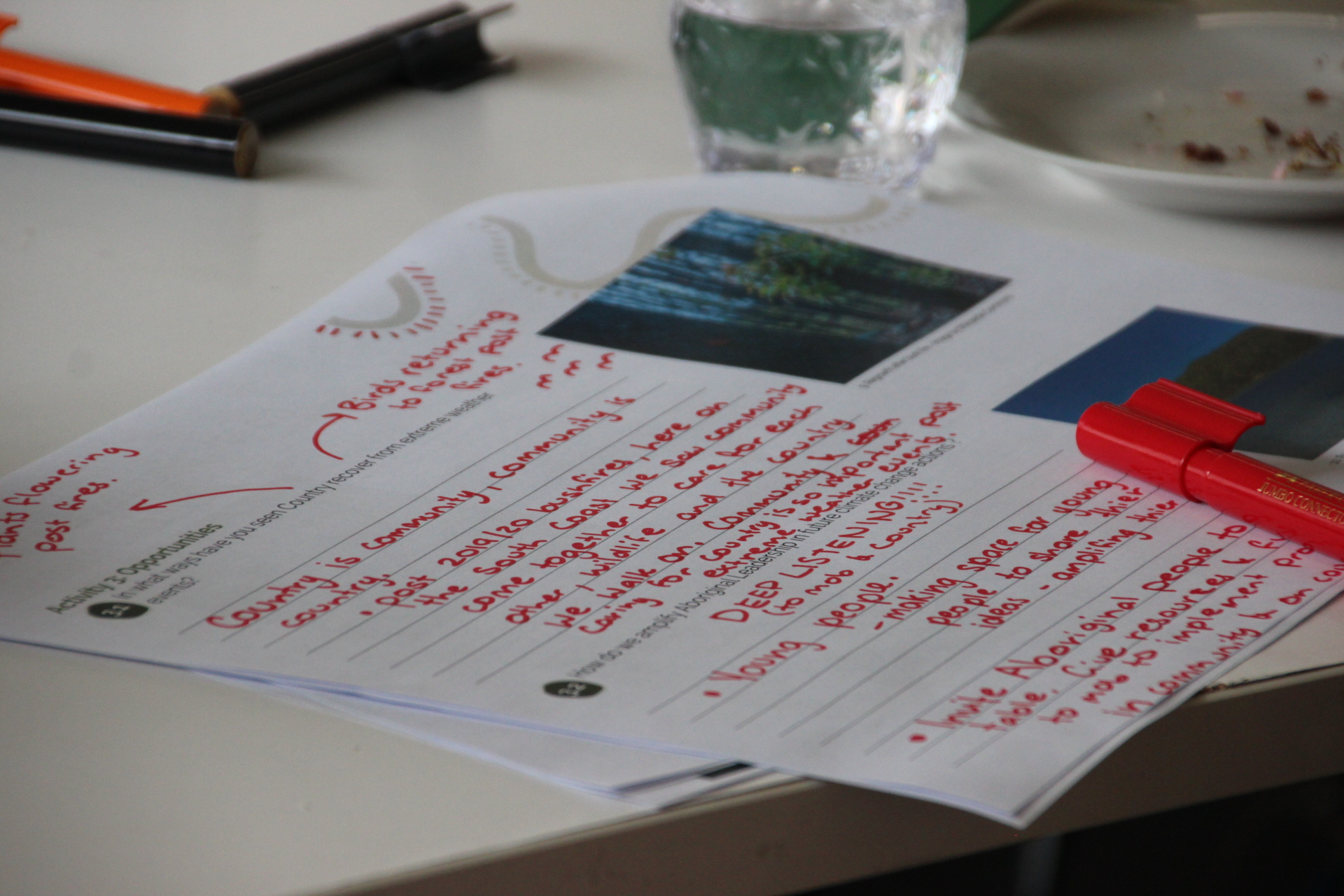
Engagement is one of the most used words in government and corporate strategy. In many cases, there is a genuine commitment to listening. But engagement is complex work. It sits within timelines, budgets and policy constraints. When compressed into a single stage of a project, it can lose some of the depth it was intended to carry.
At Murawin, we approach engagement as more than a project phase. It is not a single workshop. It is not a survey at the end of a process, and it does not conclude when a report is submitted. It is the centrepiece to our work.
Good engagement is relational, deliberate,
culturally grounded and accountable.
In structured environments, engagement often follows a practical sequence: scope is defined, questions are developed, stakeholders are invited to contribute, findings are summarised.
There is nothing inherently wrong with this. But when working with First Nations communities, additional layers of responsibility come into play.
Across our work, engagement carries deeper meaning. Communities are not simply offering perspectives. They are sharing lived experience, cultural knowledge and, at times, difficult histories with systems and institutions. That requires care, cultural safety and transparency.
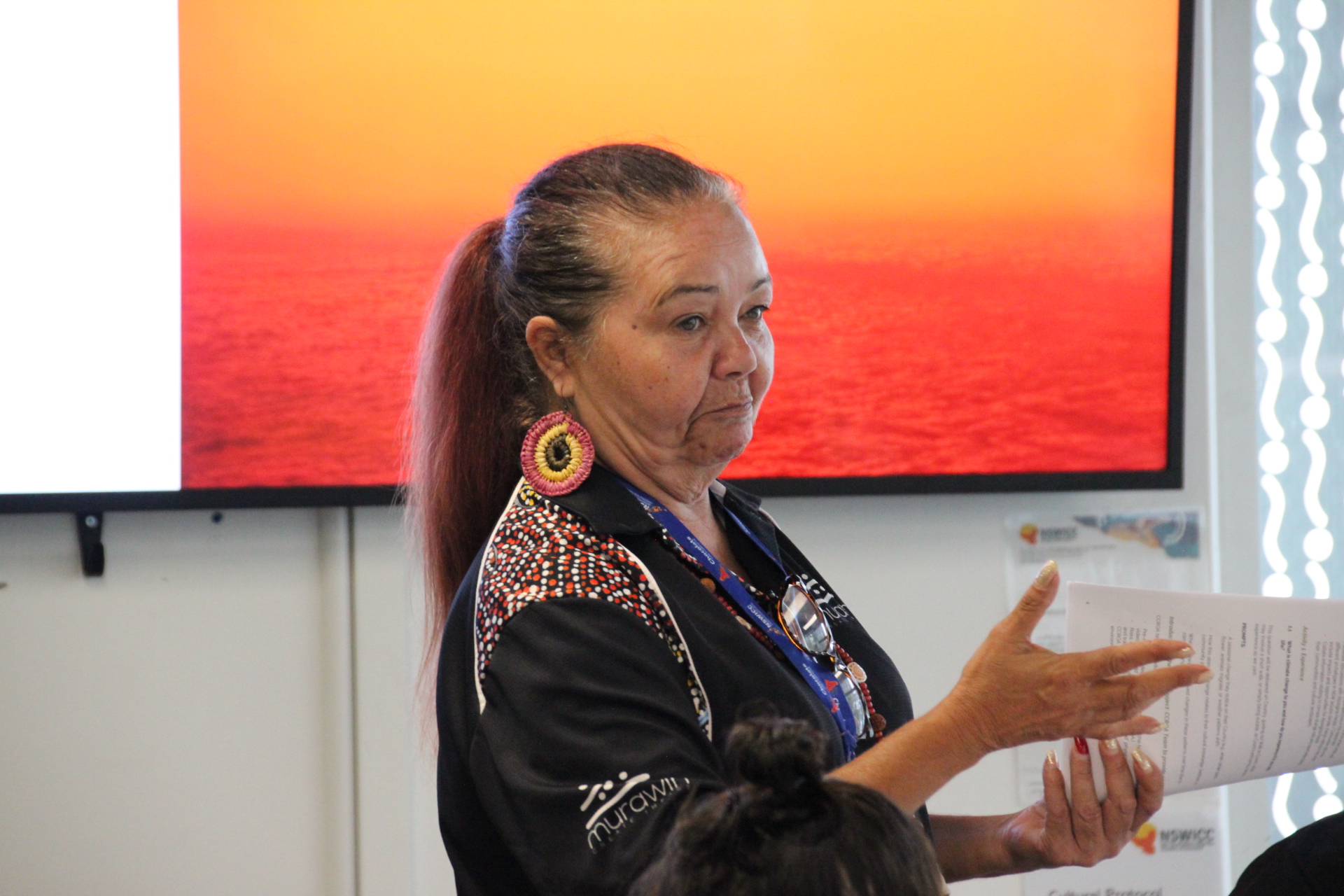
Authentically Designing Engagement
Our approach is guided by our Barri Marruma methodlogy that provides the four stages of Earth (Truth), Water (Knowledge), Fire (Transformation) and Sky (Vision). This framework shapes how we design and deliver engagement across research, evaluation and strategy.
Good engagement begins well before any workshop or interview. It includes:
- Preparation and stakeholder mapping
- Potential AIATSIS Ethics submission
- Understanding local governance and cultural protocols
- Clarifying purpose and decision-making authority
- Considering how community voices will influence outcomes
Preparation is not just logistical. It is ethical. Participants should understand why they are being engaged, how their contributions will be used and what outcomes are realistically possible.
And they should be compensated for their
time, knowledge and lived experience.
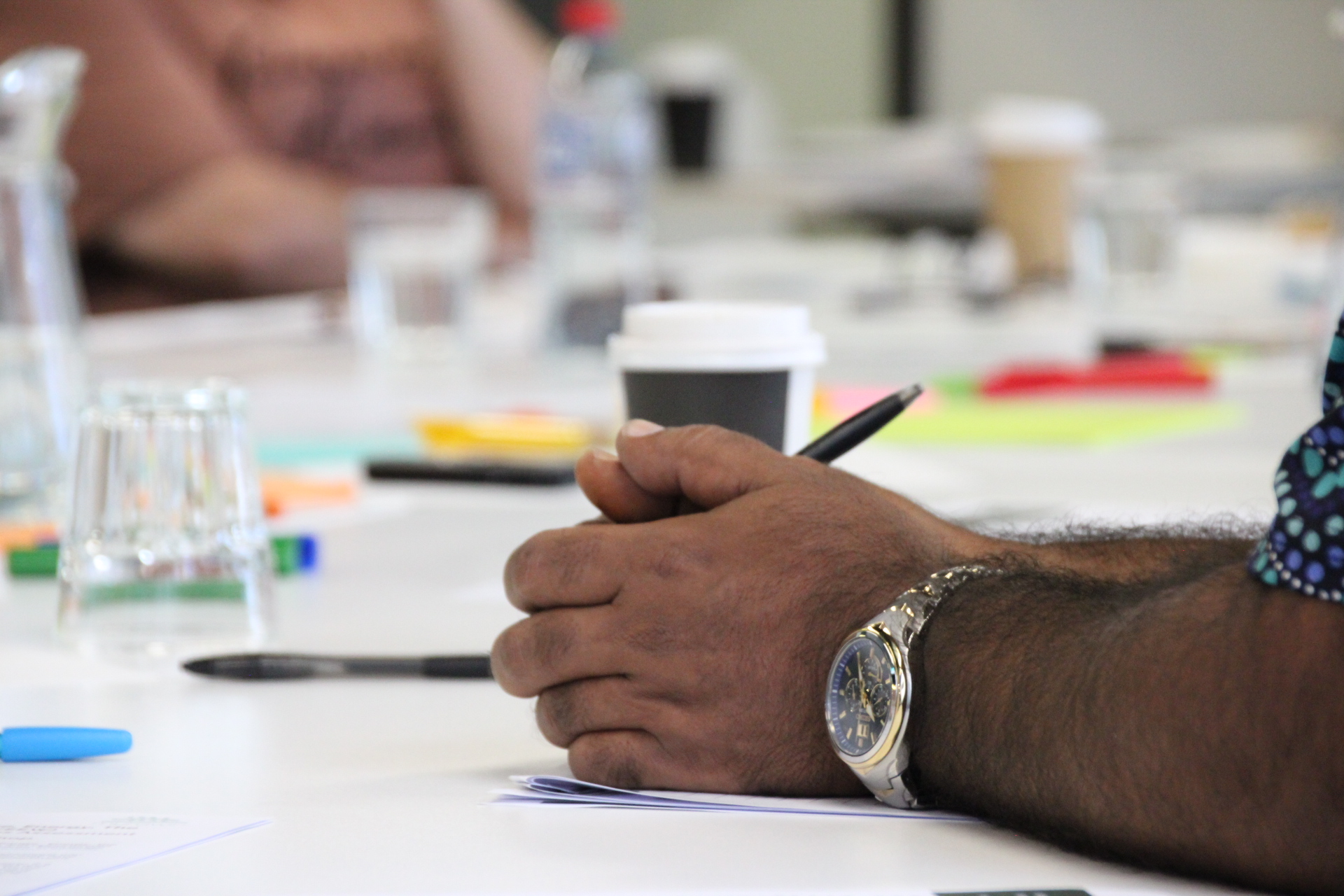
More Than Data Collection
Engagement is often framed as gathering information. In our experience, it is about creating spaces where people feel respected and safe to speak openly.
That can involve:
- Facilitating culturally grounded yarning circles
- Conducting trauma-informed interviews
- Establishing clear consent processes
- Designing prompts that invite lived experience
In work with Stolen Generations survivors and older Aboriginal community members, for example, engagement has required careful pacing and strong support protocols. In evaluation contexts, it has meant listening closely to how communities define success, and communicating that effectively to clients.
Engagement is as much about how conversations are held
as what is discussed.
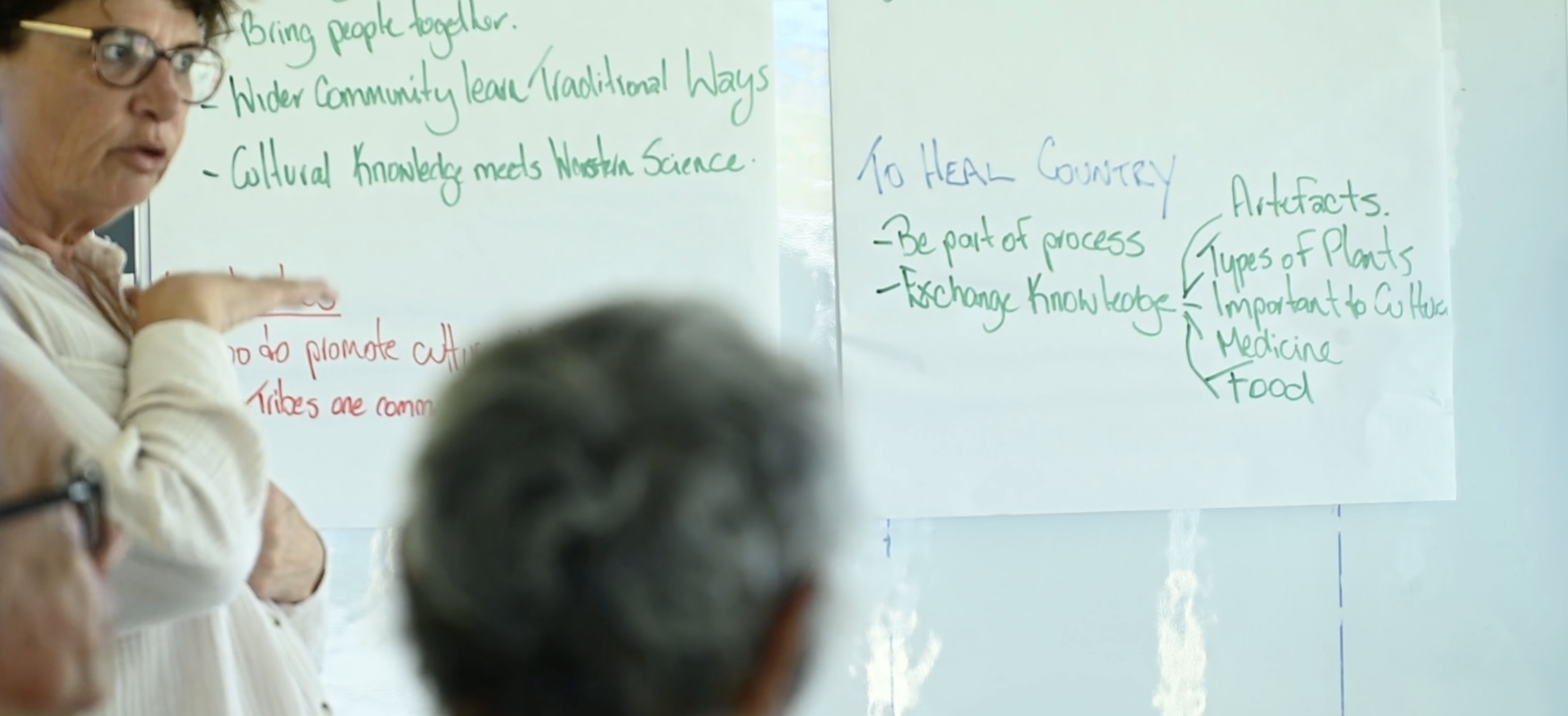
Accountability Matters
Who interprets what was shared? How are themes identified and tested? How are findings returned?
We undertake careful thematic analysis and, where appropriate, convene validation workshops to ensure we have heard participants correctly. These sessions allow us to test interpretations, clarify meaning and strengthen collective ownership of findings. Validation is not about endorsement. It is about authenticity.
Returning findings through workshops, presentations or accessible summaries continues the relationship.